2026 will be remembered as the year the region faced its most serious conflict in decades. In Abu Dhabi, it will also be remembered as the strongest half-year the property market has ever recorded.
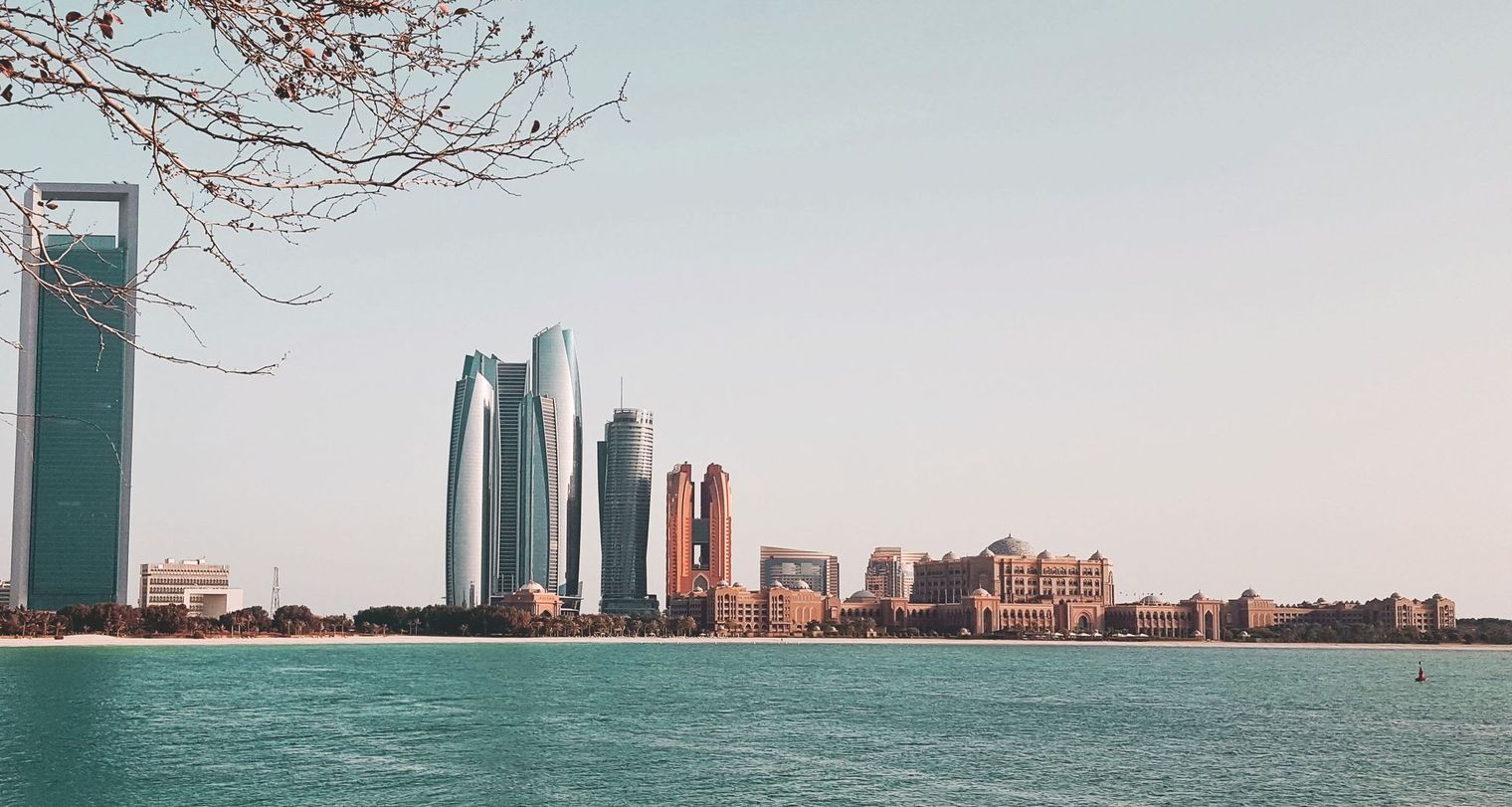
According to the Abu Dhabi Real Estate Centre (ADREC), the emirate's official real estate regulator, total transactions reached AED 117 billion in the first half of 2026, up 112% on the same period in 2025, while the number of transactions rose 61.7%. In just six months, the capital reached more than 80% of its record full-year 2025 total of AED 142 billion.
Here is what the official numbers show, who is buying, and why Abu Dhabi has become one of the most sought-after property markets in the world.
H1 2026 at a Glance
- AED 117 billion in total real estate transactions, up 112% year on year
- AED 86.1 billion in sales across 16,838 transactions, up 163.7% in value
- AED 70.4 billion in residential sales across roughly 15,900 homes, up 178% in value and 99% in volume
- 89% of residential sales value came from off-plan projects
- AED 26.7 billion in mortgage transactions, up more than 33%
- AED 13.8 billion in foreign direct investment, up 309% and already above the full-year 2025 figure
- 116 nationalities of overseas investors, up from 82 a year earlier
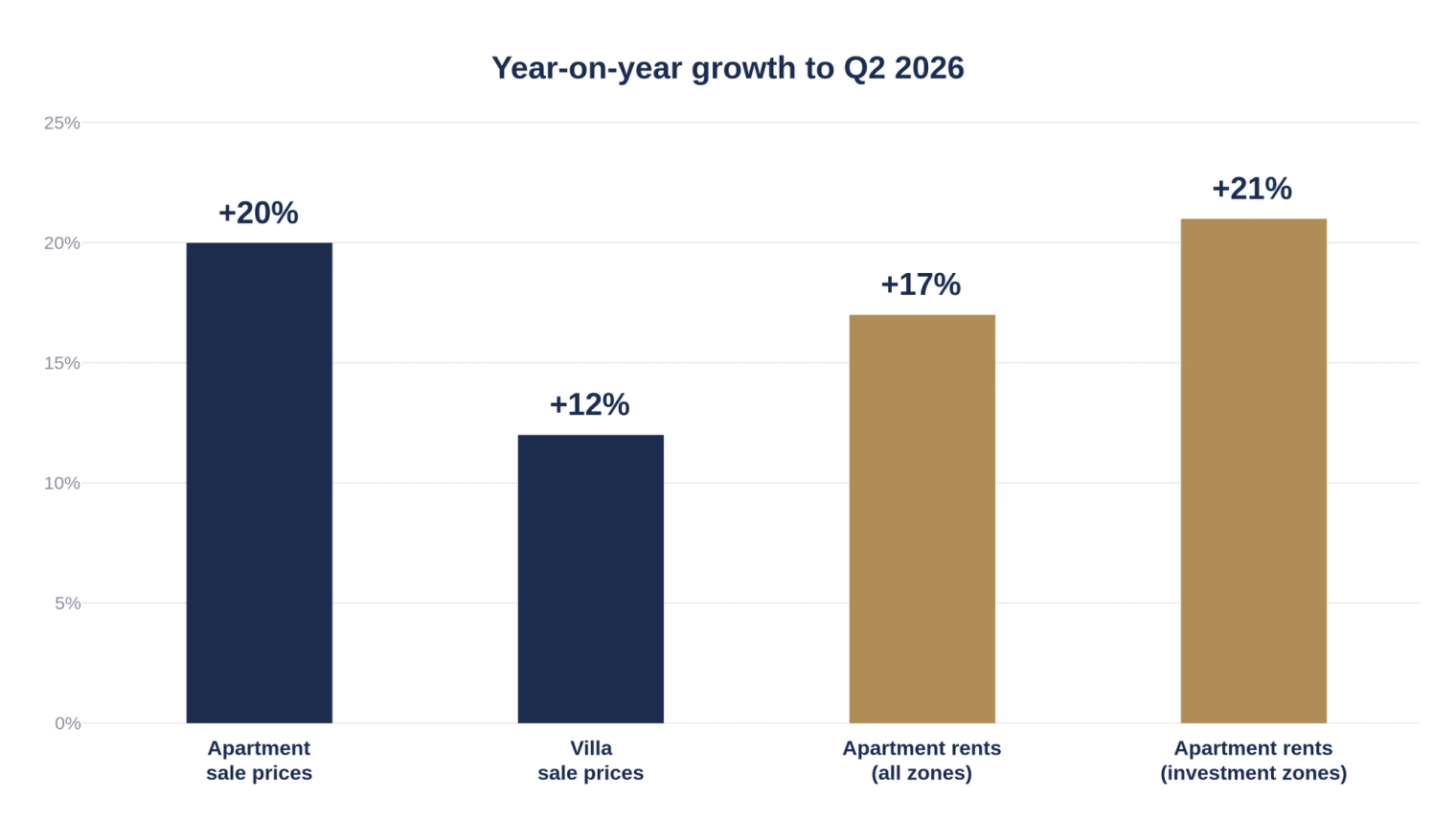
- Apartment prices up 20% and villa prices up 12% year on year to Q2 2026, per ADREC's repeat sales index
Sold Out in Days, Even During the Conflict
The headline figures are impressive, but launch-day results show just how deep demand runs.
In early July, Modon released Hudayriyat Golf Estates, a collection of villas and townhouses set around a championship golf course. Around 1,700 homes worth more than AED 13 billion were sold within days, which Modon described as the highest publicly recorded sales value for a single residential launch in UAE history. Notably, 81% of buyers were new Modon customers, a clear sign that the buyer pool is widening.
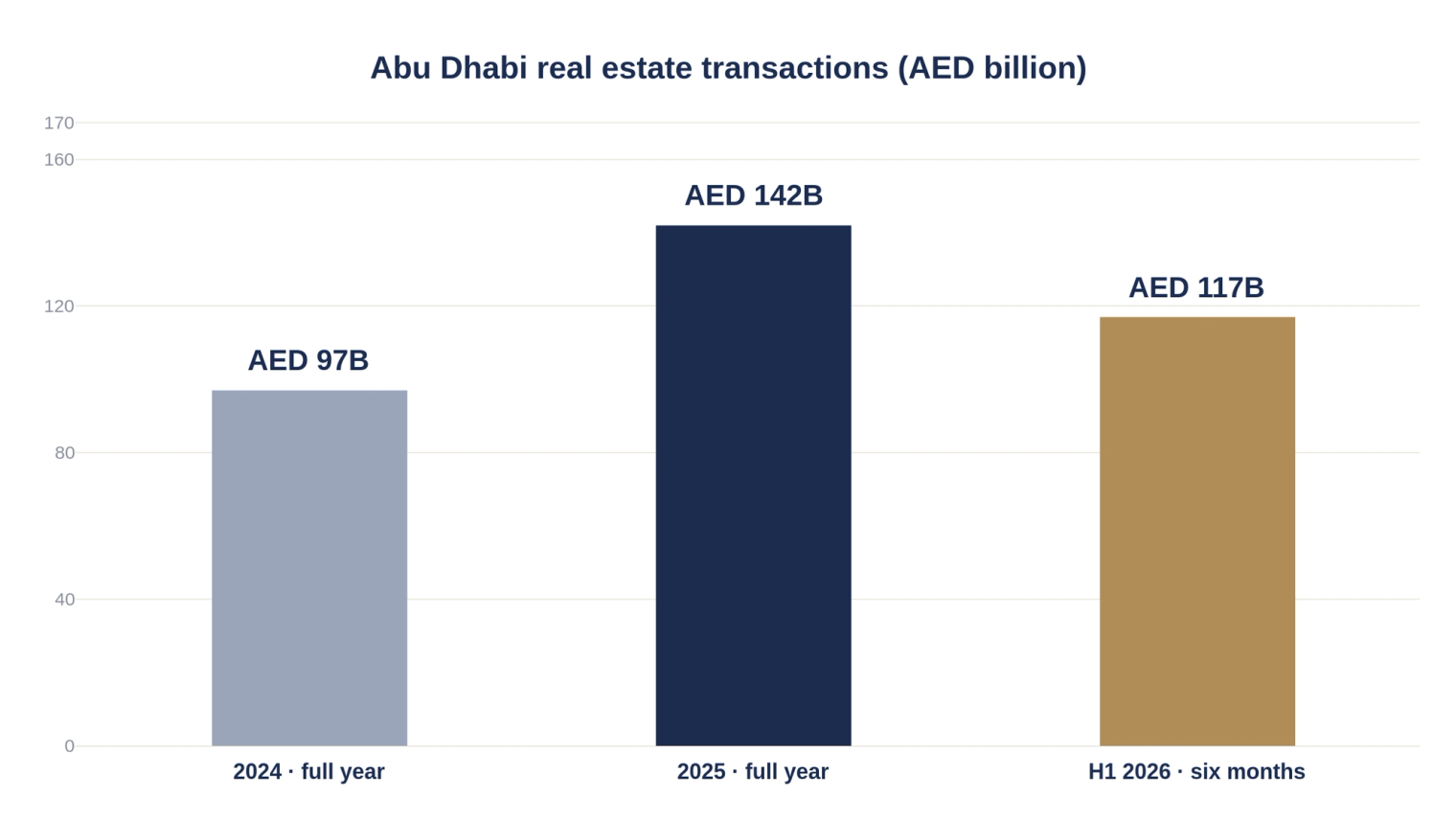
Hudayriyat Island became the emirate's top-performing district in H1 2026 with AED 19 billion in residential sales, roughly 27% of all residential sales in Abu Dhabi. Five of the ten largest projects of the half were on the island, led by Al Naseem (AED 4.3 billion), Nawayef West (AED 4.2 billion) and Nawayef East (AED 4.1 billion), followed by Bashayer Residences and Bashayer Villas.
On Saadiyat Island, The Row Saadiyat and Four Seasons Private Residences each recorded AED 3.2 billion in sales, and Yas Riva Residences on Yas Island also ranked among the ten biggest projects. Together, the top ten projects generated AED 30 billion, or 43% of all residential sales value. Aldar, the emirate's largest listed developer, reported three sold-out or near sold-out launches in the second quarter alone.
Other districts also delivered strong results: Saadiyat Island reached AED 13.3 billion (up 63%), Reem and Maryah Islands together reached AED 10.5 billion (up 153%), and Yas Island reached AED 7.3 billion (up 91%).
Who Is Buying? Foreign vs Local Investors
ADREC's H1 2026 report splits residential sales value into three buyer groups:
- Resident expatriates: 51% (AED 35.6 billion), the single largest buyer group
- UAE nationals: 30% (AED 21.0 billion)
- Overseas (non-resident) investors: 20% (AED 13.8 billion)
Shares are rounded, so they total slightly over 100%.
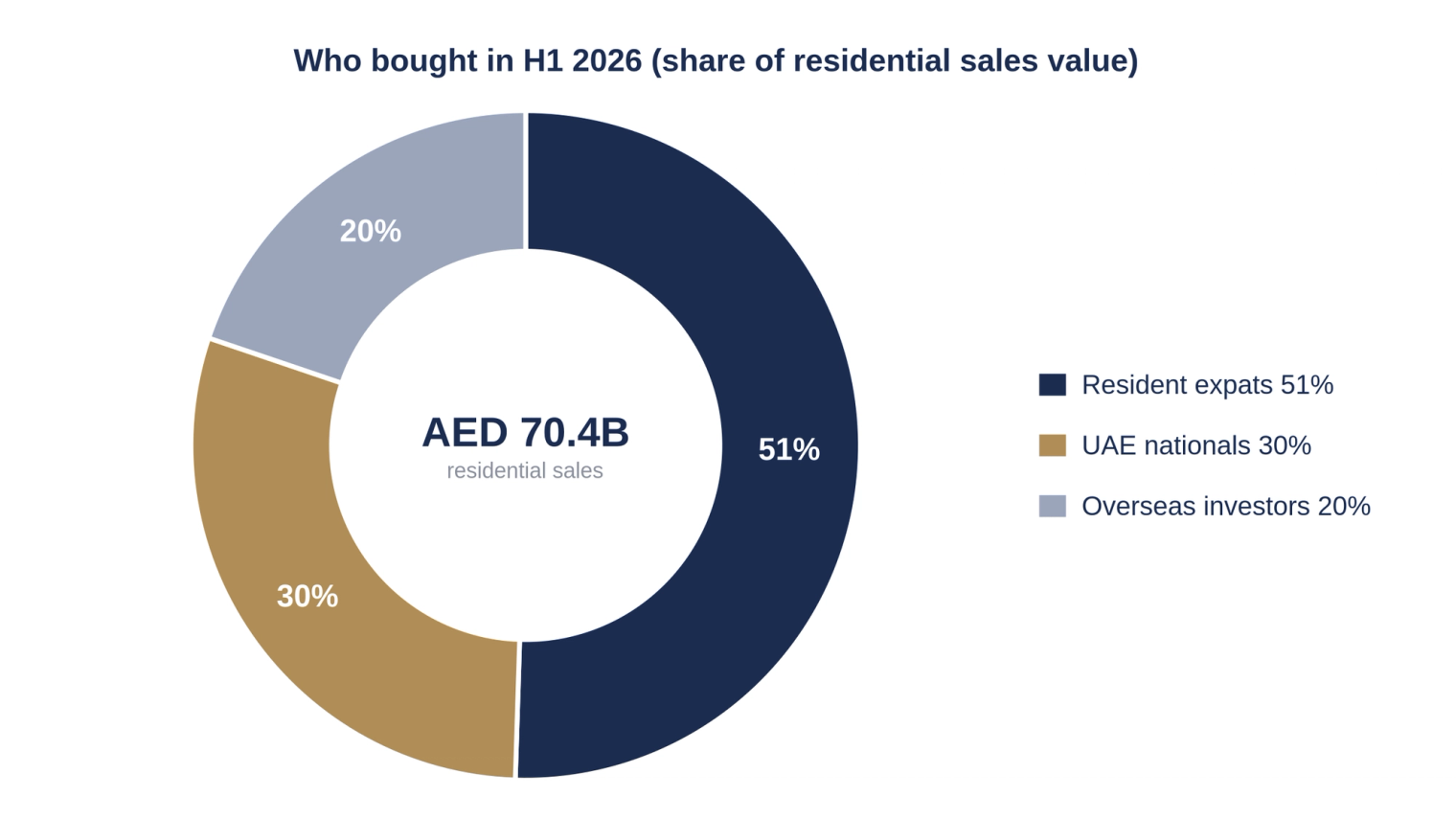
There are two useful ways to read this:
- Foreign vs Emirati: foreign buyers, residents and overseas investors combined, accounted for around 70% of residential sales value, with UAE nationals at 30%.
- Within the UAE vs overseas: buyers already living in the country, Emiratis plus resident expats, made up around 80% of sales, with investors buying from abroad at 20%.
Both views point to the same strength. Abu Dhabi's rise is anchored by people who live in the city and know it best, and it is being amplified by a fast-growing wave of international capital.
How the mix changed from H1 2025
In the first half of 2025, Emiratis held 35% of residential sales value, resident expats 52% and overseas investors 13%. One year on, the overseas share has risen by seven percentage points. In value terms, overseas investment roughly quadrupled from AED 3.4 billion to AED 13.8 billion, resident expat purchases grew from AED 13.1 billion to AED 35.6 billion, and Emirati purchases more than doubled from AED 8.9 billion to AED 21.0 billion. Every buyer group grew strongly; overseas investors simply grew the fastest.
The leading sources of foreign investment included the UK, China, Russia, the US, Germany and France.
Why Abu Dhabi Is Rising: Seven Drivers
1. More of the capital is open to international buyers
ADREC approved eight new investment zones in H1 2026, bringing the total to 50. Each new zone opens prime addresses to ownership by all nationalities. Abu Dhabi has long had the wealth, waterfront and infrastructure of a global city; it now offers international buyers a far wider choice of homes, and they are responding.
2. A stable home for global capital
A dirham pegged to the US dollar, no capital gains tax, low external debt and one of the world's deepest sovereign wealth ecosystems make Abu Dhabi a natural base for long-term wealth. The UAE has historically attracted more capital during periods of regional uncertainty, and the record arrival of overseas investors in H1 2026 follows that pattern.
3. Strong buyer protection
Off-plan payments in Abu Dhabi are held in regulated escrow accounts and released to developers only as verified construction milestones are reached. ADREC's Madhmoun platform has issued more than 41,200 verified advertising permits, so buyers can trust what they see listed. In September 2026, a new ADREC framework also made it possible to finance off-plan homes with the bank registered before handover, and Aldar completed the first such mortgage.
4. Master developers with proven delivery
Ten developers accounted for around 90% of off-plan primary sales in H1 2026, led by Modon (AED 20.6 billion) and Aldar (AED 15.0 billion). Buyers are choosing established, well-capitalised master developers, and that is exactly where the sell-outs are happening.
5. A world-class destination pipeline
Yas Island is set to welcome Disneyland Abu Dhabi and Sphere Abu Dhabi, the Guggenheim Abu Dhabi is due to open in December, and Aldar has unveiled Marsa Al Saadiyat, a AED 100 billion waterfront district completing the Saadiyat Island masterplan, with its first villa community, Talay, launched in September. Investors are buying into where the capital is heading, not only where it stands today.
6. Capital growth and rising rents
Apartment prices rose 20% and villa prices 12% year on year to Q2 2026. New apartment lease prices climbed 17% across the emirate and 21% within investment zones, and villa values are up 72% cumulatively since Q1 2020. Owners are being rewarded on both capital value and rental income.
7. Measured, well-planned supply
Abu Dhabi's residential stock stands at around 409,000 units and has grown at under 3% a year since 2022. ADREC expects around 71,000 additional homes by 2030, with 77% concentrated in six established districts: Saadiyat, Reem, Yas, Hudayriyat, Zayed City and Khalifa City. With sales volumes up 99% year on year, demand is comfortably outpacing new stock.
What This Means for Investors
The first half of 2026 showed that Abu Dhabi's market is built on genuine, broad-based demand. The capital now draws buyers from 116 countries, sells new launches within days and rewards owners with double-digit price growth, all through one of the most testing periods the region has seen.
For investors, the opportunity lies in the selection: the right master developer, the right district and the right unit within the launch. With the next wave of releases, from Marsa Al Saadiyat to new phases on Hudayriyat and Yas, already arriving, early access matters more than ever.
Quadrant follows every major Abu Dhabi launch alongside ADREC's official data, so our clients know where they stand before they commit. Speak to our team for a curated shortlist of the projects that fit your goals.
Sources
- Abu Dhabi Real Estate Centre (ADREC), H1 2026 Abu Dhabi Real Estate Market Report
- Abu Dhabi Media Office: ADREC records AED 117bn in real estate transactions in H1 2026
- WAM: Abu Dhabi Real Estate Centre records AED 117 billion in transactions during H1 2026
- AGBI: Inside Abu Dhabi's property surge (Hudayriyat Golf Estates launch)